In a Shingon temple in Kyoto, a small room sits in half-light. Incense smoulders. A single candle throws warm light onto a figure of gilded wood. In front of it: a bowl of water, fresh flowers, a piece of fruit. No spectacle. No display. And yet — anyone who steps into this room senses immediately: something here is different. There is a center.
What stands there is called 御本尊 — Gohonzon. And it is far more than an altar in the Western sense. It is the place where the visible and the invisible world touch each other. In the Shingon tradition the Gohonzon is the spiritual heart of every practice. Not the building. Not the ritual. The altar.
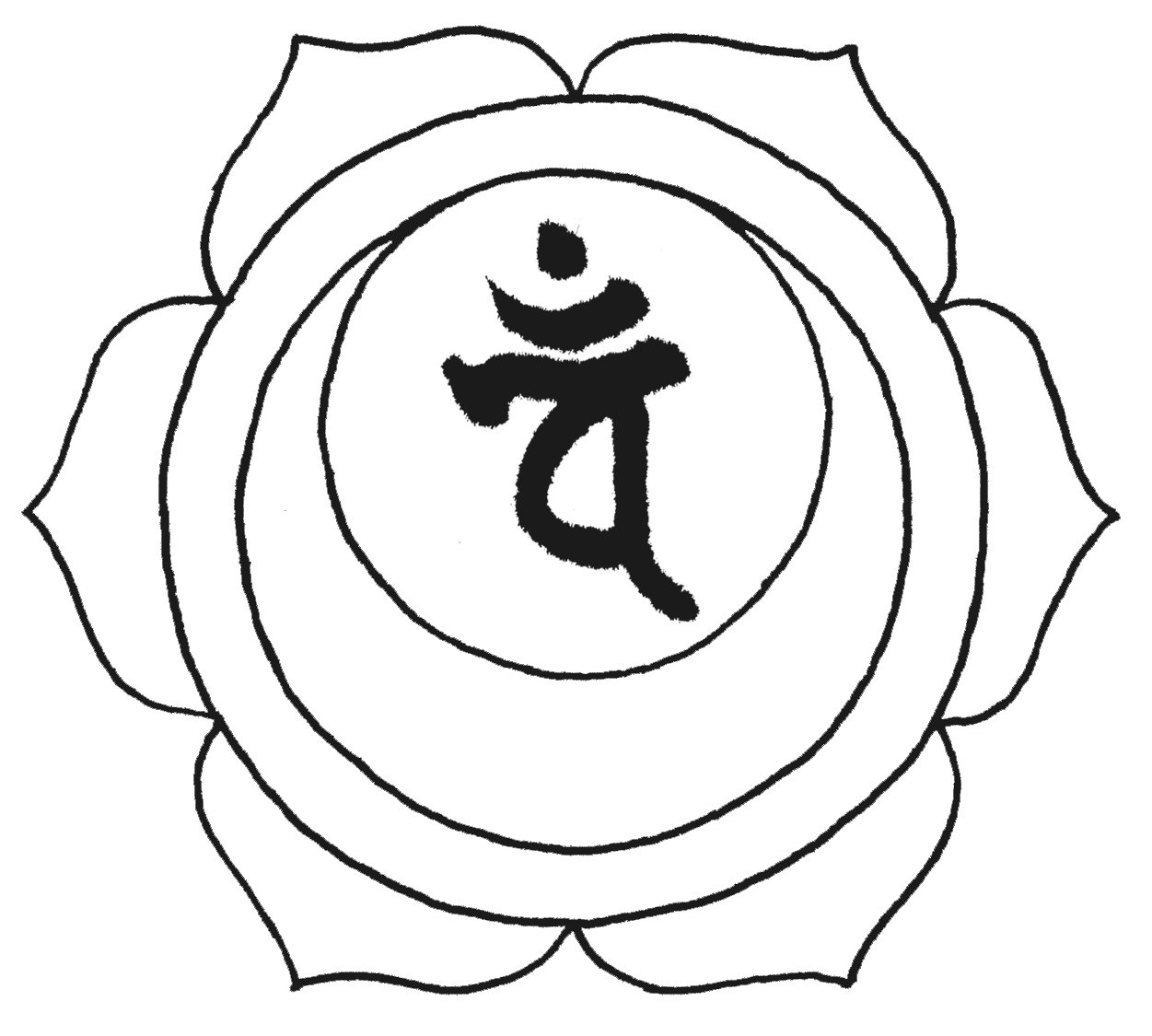
The kanji: what does Gohonzon mean? 御本尊
Together this gives: 御本尊 — "the venerable original object of veneration." The Gohonzon is not just any altar. It is the place where the central spiritual force is venerated and experienced. In every Shingon temple the Gohonzon is the main deity — the focal point around which everything is ordered.
Every spirit can be a Honzon 仏
In the Shingon tradition there is no single Gohonzon. Each temple has its own. Tōji in Kyoto venerates Yakushi Nyorai 薬師如来, the Buddha of medicine and inner light. Kongōbuji on Mount Kōya venerates Dainichi Nyorai 大日如来, the cosmic Buddha from whom everything proceeds.
And here lies a crucial point: in Shingon, every Buddhist spirit — every Buddha, every bodhisattva, every Myoo — can be a Honzon. The choice of Honzon is not a theological obligation. It is a relationship. A person does not choose his Honzon. The Honzon chooses the person. Or more precisely: the resonance arises. Some people feel a deep connection to Kannon 観音, the bodhisattva of compassion. Others to Fudo Myoo 不動明王, the immovable wisdom. Others again to Marishiten 摩利支天, the guardian deity of warriors and travellers.
The altar at home — the personal Gohonzon — mirrors this relationship. It is not a piece of decoration. It is the place where a person gives their spiritual connection a physical space.
The mandalas — Taizo-kai and Kongo-kai 曼荼羅
Anyone who wants to understand the Gohonzon has to understand the mandalas. In the Shingon tradition there are two great mandalas which together depict the entire spiritual reality: the Taizo-kai Mandala 胎蔵界曼荼羅 (the Womb Realm mandala) and the Kongo-kai Mandala 金剛界曼荼羅 (the Diamond Realm mandala).
The Taizo-kai describes the realm of compassion — the principle that all beings are nourished by the same source, like a child in the womb. It is unfolding, opening, becoming. At the center sits Dainichi Nyorai, surrounded by hundreds of Buddhas, bodhisattvas, and guardian deities — each being in its place, each a facet of the same universal force.
The Kongo-kai describes the realm of wisdom — indestructible like a diamond. It is clarity, structure, recognition. Here too Dainichi Nyorai stands at the center, but the arrangement is geometric, precise, crystalline.

Every spirit in these mandalas can be a Honzon. The Gohonzon on the altar is therefore not arbitrary — it has a place in the cosmic web. Anyone who venerates Kannon on their altar is not venerating only a single figure. They are venerating a particular aspect of universal reality, as it is depicted in the mandala. The altar becomes a mandala in miniature — a microcosm reflecting the macrocosm.
The Gohonzon is not a religious object. It is a gate. Through the altar the cosmic order of the mandalas enters daily life. Your own room becomes a temple. Daily practice becomes an encounter with the numinous.
The five elements on the altar 五大
In the Shingon tradition nothing on the altar is by chance. Every object represents one of the five elements — Godai 五大 — which in Japanese cosmology form the basic building blocks of reality: earth 地, water 水, fire 火, wind 風, and emptiness/space 空.
When all five elements are gathered on the altar, something arises that goes beyond the sum of the parts. The Japanese call it mandala — an ordered depiction of reality. The altar becomes the world in miniature. And whoever sits before this altar sits at the center of this world.

The Butsudan — altar in daily life 仏壇
In Japan the home altar is called Butsudan 仏壇 — literally: "Buddha platform." Almost every traditional Japanese house has one. It often stands in the most important room, sometimes in its own alcove (Tokonoma). People pray in front of it. Incense is lit before it. The family sits in silence in front of it.
The Butsudan is not a museum. It is alive. Every day fresh water is placed on it. The flowers are changed when they wilt. The candle is lit and snuffed. These daily acts are not duty — they are rhythm. They give the day a structure that goes beyond the functional. The morning does not begin with the alarm clock. It begins with lighting the incense stick.
In the Shingon tradition the Butsudan goes one step further. It is not only a place to remember the ancestors — it is a place of practice. Meditation happens before the altar. Mantras are spoken before the altar. Mudras are formed before the altar. The Butsudan is the place where the three mysteries — body, speech, and mind — come together.
The personal altar within Shingon Reiki 靈氣
Within Shingon Reiki the personal altar plays a central role. It is not prescribed — but many practitioners experience it as a natural step. At some point along the path, the need arises to give the spiritual experience a physical place. Not because one has to. Because it feels right.
In the Japanese tradition the altar is not "built." It comes into being. It grows with the practice. Perhaps it begins with a single candle in a quiet spot. Then an incense stick is added. Then an image — perhaps a Siddham character, perhaps a depiction of Dainichi Nyorai, perhaps a piece of calligraphy. The altar mirrors the path. It shows where someone stands — not where they should go.
What stands on the altar matters less than the attitude with which one meets it. Shingon has a word for this: Kaji 加持 — the interplay of universal force and human receptivity. The altar receives what the practitioner gives: attention, silence, presence. And it gives back what the practitioner needs: centering, clarity, connection.
In the West people ask: "How do I set up my altar correctly?" In Japan people ask: "What is my relationship with my Honzon?" The difference is decisive. It is not about arrangement and rules. It is about encounter. The altar is alive because the relationship is alive.
Kaji — when the altar answers 加持
There is a moment many practitioners describe. You sit before the altar. You have lit the incense. Your hands are folded, or you have formed a mudra. And then — silence. Not the silence of absence. The silence of presence. Something is there. Something answers.
In the Shingon tradition this is not chance and not imagination. It is Kaji — the interplay of Ka 加 (the adding, the descending of universal force) and Ji 持 (the holding, the receiving by the human being). Kūkai, the founder of the Shingon school, described it as the encounter between the cosmic Buddha and the practitioner — not as an abstract concept, but as palpable experience.
The Gohonzon is the place where Kaji happens. Not the only place — but the most natural. Because everything is prepared: the five elements are gathered, the room is purified by the incense, the mind is centered by the ritual. The altar creates the conditions. What then happens lies beyond words.
The details — which spirits can find a place on the altar, which rituals are practiced before it, how Gohonzon and initiation connect — belong in the direct encounter, from person to person, as the tradition has been transmitted for centuries.
What can stand here is this: if you have felt something while reading these lines — a longing, an impulse, a quiet pull toward your own sacred place — then the Gohonzon has already begun to work in your life. Not as an object. As what its name says it is: the venerable origin, waiting to be venerated.
Your entry into Shingon Reiki
The Gohonzon unfolds its depth in living practice. Discover which entry suits you.
Your path Upcoming events