
A name most people only know by hearsay
薬師如来 — Yakushi Nyorai. The Medicine Buddha. Whoever has heard of him in Western Reiki may know the name. Maybe an image: a seated figure, lapis-blue, a medicine bowl in his hand. Beautiful to look at. And then?
In the West it usually stops there. A symbol. An illustration. A cultural detail from Japan that got lost on the way through Hawai'i. Most Reiki practitioners never work with Yakushi Nyorai — because they were never initiated into him.
And this is exactly where the difference begins.
What a Buddhist spirit is — and what a symbol is not
In Shingon Reiki, symbols are not abstract signs to memorise and then apply like a formula. Symbols are keys. They open a connection to a Buddhist spirit — a being of light venerated for centuries in the Buddhist-shamanic tradition.
The Medicine Buddha is such a spirit. He belongs to a lineage that reaches via Dainichi Nyorai, the great cosmic sun Buddha, into the present. And in Shingon Reiki this connection is not made through books — it is made through initiation.
The decisive difference: in Western Reiki you draw a symbol and hope something happens. In Shingon Reiki you are initiated into the Buddhist spirit — and the connection is there. The symbol then works like a key opening a lock. Without the initiation the key does not fit.
The key-and-lock principle
In the Shingon traditions, symbols work according to a principle you can imagine as key and lock. The initiation links the symbol with the spiritual force — with the Buddhist spirit whose energy is meant to flow through the symbol.
Without that link anyone can draw the symbol. It looks correct. But the force does not flow through. It is like a key that fits no lock.
And there is a second aspect: the more precisely the symbol is drawn, the better the connection works. Imprecise symbols lose their effectiveness over time. That is no superstition — it is the result of centuries of practice in which precision and devotion work together.
The three mysteries — body, speech, mind
In esoteric Buddhism there is a concept that pervades everything: the three mysteries — 三密, Sanmitsu. Body, speech and mind. Not as theory, but as simultaneous practice.
When in practice you use all three mysteries at once — hands in the mudra, the mantra on your lips, the symbol in mind — you focus the energy on a single point. The three mysteries do not generate more energy. They focus it. Like a lens gathering sunlight.
It is precisely this practice that Mikao Usui experienced on Mount Kurama. And it is precisely this practice that has almost completely been lost in Western Reiki.
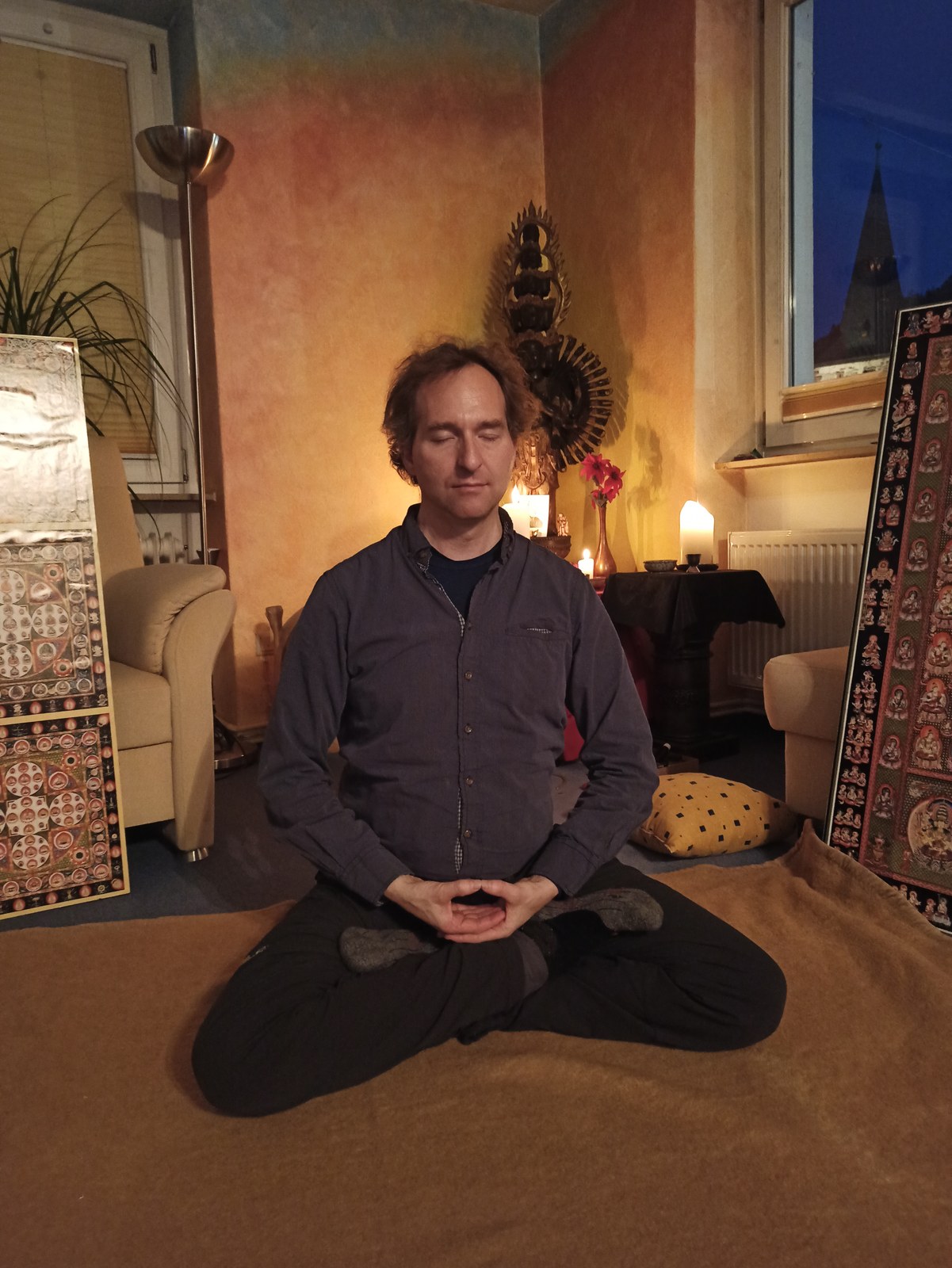
Yakushi Nyorai in Shingon Reiki
In Shingon Reiki Level 1 you are initiated into the power of the Medicine Buddha. This is no symbolic act. It is a direct transmission practised in the Shingon tradition since Kūkai in the 9th century — the integration of meditation and body-based spiritual practice.
Yakushi Nyorai stands in the lineage of Dainichi Nyorai — the cosmic Buddha from whom all spiritual life force flows. His twelve vows include the liberation of all beings from suffering. His light is described as lapis lazuli — deep blue, clear, penetrating.
After the initiation you carry this connection within you. When you lay on hands, it is not simply "energy" that flows — it is the power of a Buddhist spirit who has been at work in this tradition for centuries.
Imagine: you lay on hands — and feel not only warmth, but a presence. Something working through you. This is not wishful thinking. This is what practitioners describe after their initiation into Yakushi Nyorai.

Why the Medicine Buddha is relevant right now
In a time when Reiki is often reduced to relaxation, Yakushi Nyorai reminds us what it is actually about: the development of the whole person. The connection of body and mind. Spiritual forces that come not from a book but from a living transmission.
The Medicine Buddha is no relic of a past era. He is the reason why Shingon Reiki feels different from what most people know. Because here it is not just technique that is passed on — but a power that awakens through initiation.
And this is only the beginning. Yakushi Nyorai is one of many Buddhist spirits in the Shingon tradition — Fudo Myoo, Senju Kannon, Jizo Bosatsu, Dainichi Nyorai and others. Each opens a different dimension of the practice. Each becomes accessible through its own initiation.
Experience the power of the Medicine Buddha
In Shingon Reiki Level 1 you are initiated into Yakushi Nyorai. Five initiations across three days — and you feel the difference.