
You have seen it before. In Japanese stories — in films, in animation — hands move faster than the eye can follow, fingers lock into shapes, and something unseen is released. When you watch it, you know. There is something real here. Something that cannot have been invented.
That feeling is correct. Kuji Kiri is not a fictional technique. It is a thousand-year-old practice that comes directly from the traditions of esoteric Buddhism (Shingon), Shugendo, Shinto, and shamanic Daoism. What stories show you is the shadow of a reality that only opens through direct initiation.
This article shows you what Kuji Kiri really is. What the nine seals open. Which spirits work through them. And why a 12th-century monk, surrounded by armed attackers, walked away alive through the power of Kuji Kiri — in a scene that reads like fiction, but is recorded in temple history.
What Kuji Kiri really is 九字切り
九字切り — Kuji Kiri — literally means "cutting the nine signs." The nine signs are: 臨・兵・闘・者・皆・陣・列・在・前. What most people miss: Kuji Kiri is not only the hand signs. It is a complete system on four simultaneous levels — the nine kanji cut into the air, the nine mudras, the nine mantras, and the nine visualisations. Each seal carries its own power, its own spirit, its own effect.
The nine seals build on each other like a system of keys. Each one opens the next. No level can be skipped. And every single one changes something concrete — in your perception, in your relationship to your surroundings, in what becomes energetically possible.
What the nine seals open — and their mudras
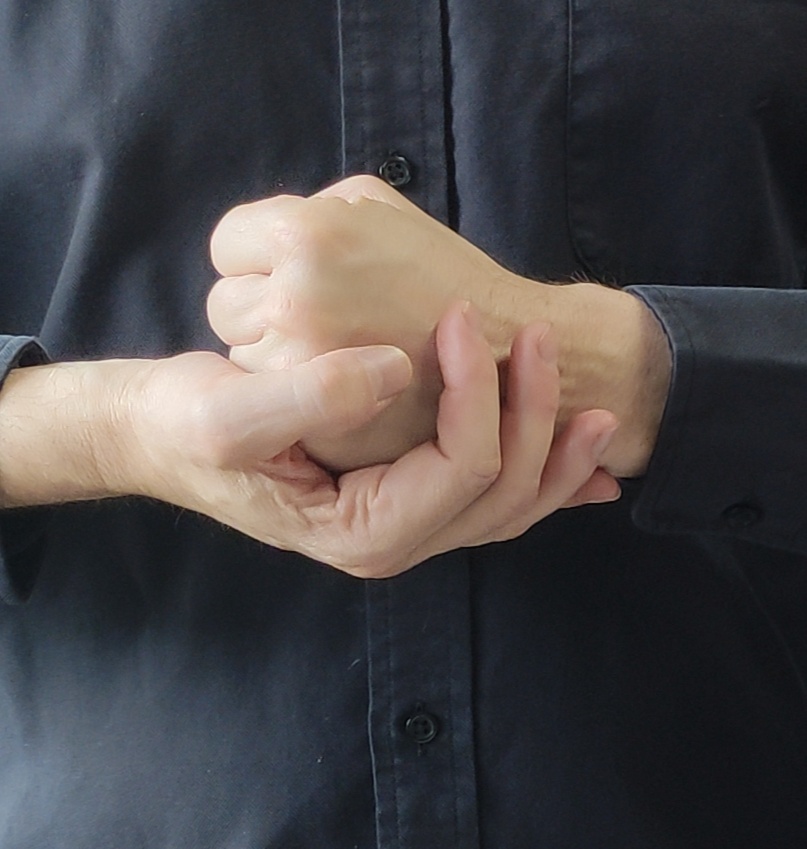
Each of the nine seals has its own mudra — a hand position that brings the body into a specific energetic configuration. The mudra is not symbolic. It is a key. It changes the flow of energy in the body the moment the fingers take their position. In meditation with the mudra, the effect of that seal begins to unfold.
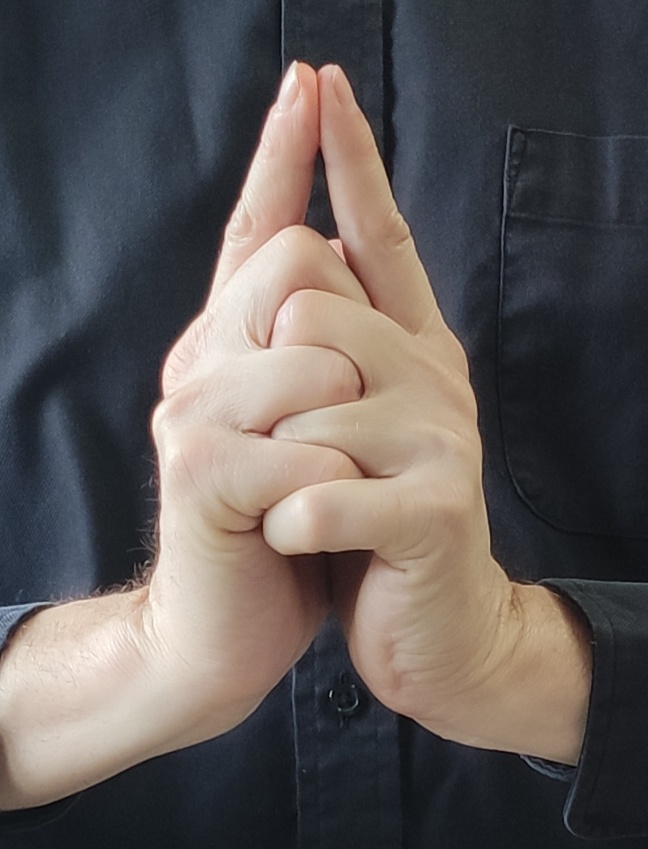
Power & inner fire
Rin ignites the inner fire. It strengthens body and mind and connects you to a source of power beyond your own energetic system. Practitioners who meditate with the Rin mudra feel an inner stability beginning to build — a foundation on which everything else rests.
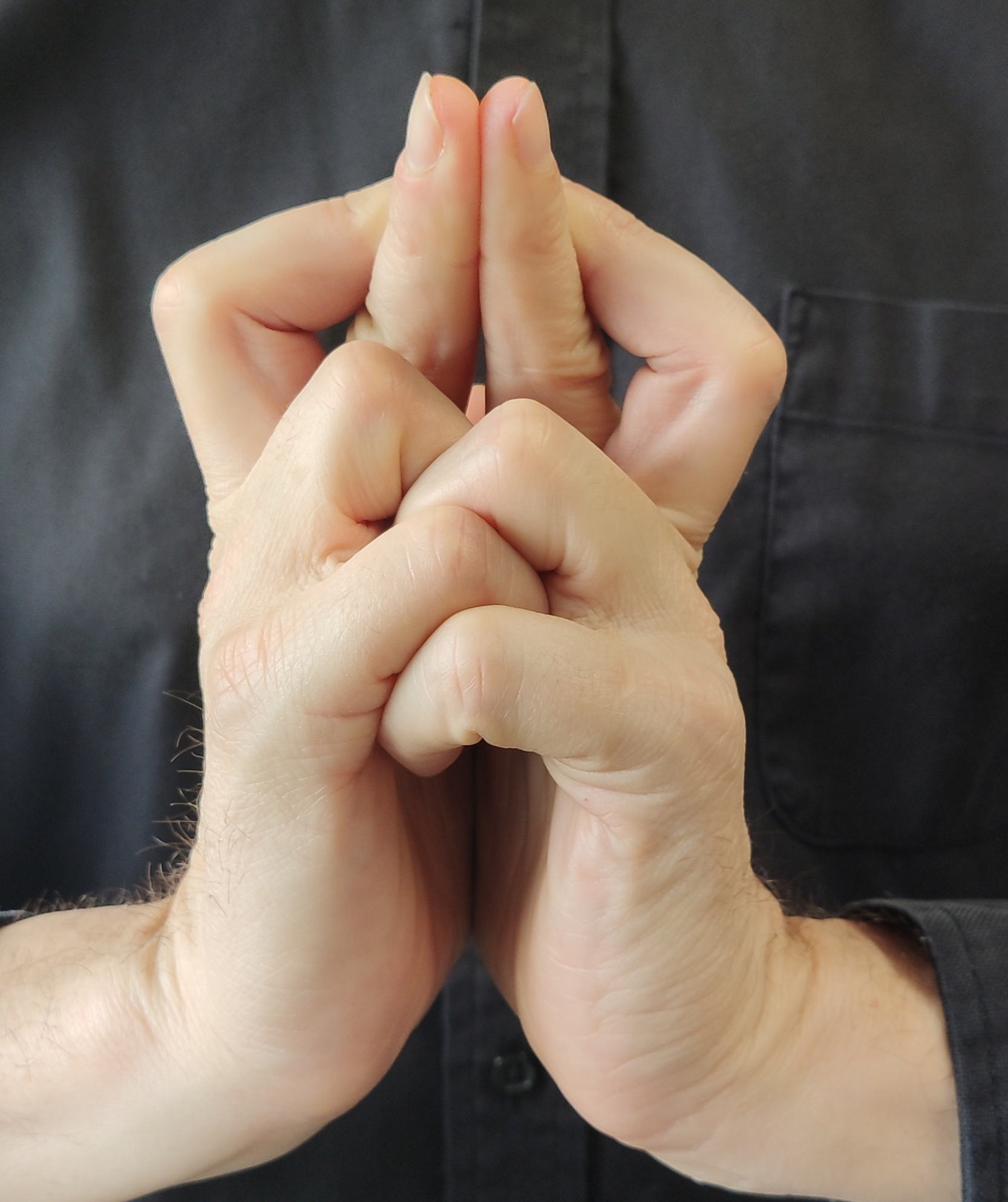
Directing energy
Hyō directs the power Rin ignited — through the body, through the space, into any direction you choose. The mudra aligns the energy like an antenna turned toward a specific point.
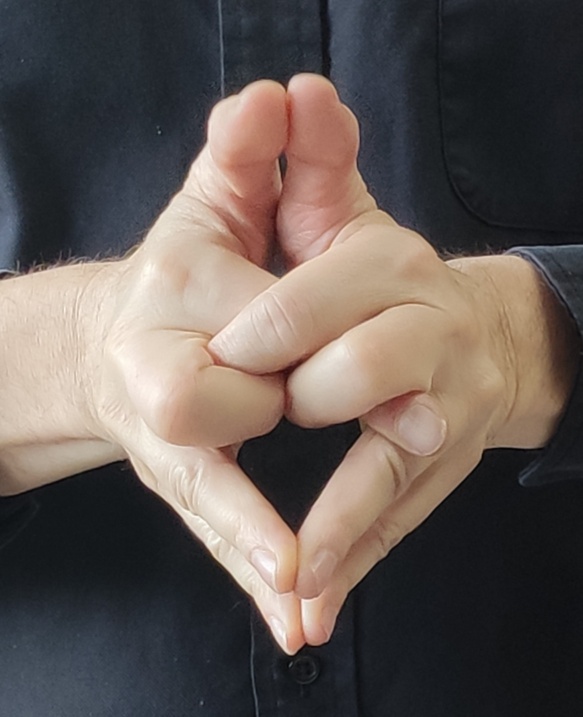
Harmony & intuition
Tō brings you into accord with your surroundings and sharpens intuition, so you sense what is about to happen before it happens. Like a tuning fork that aligns the whole body to the frequency of the field around it.
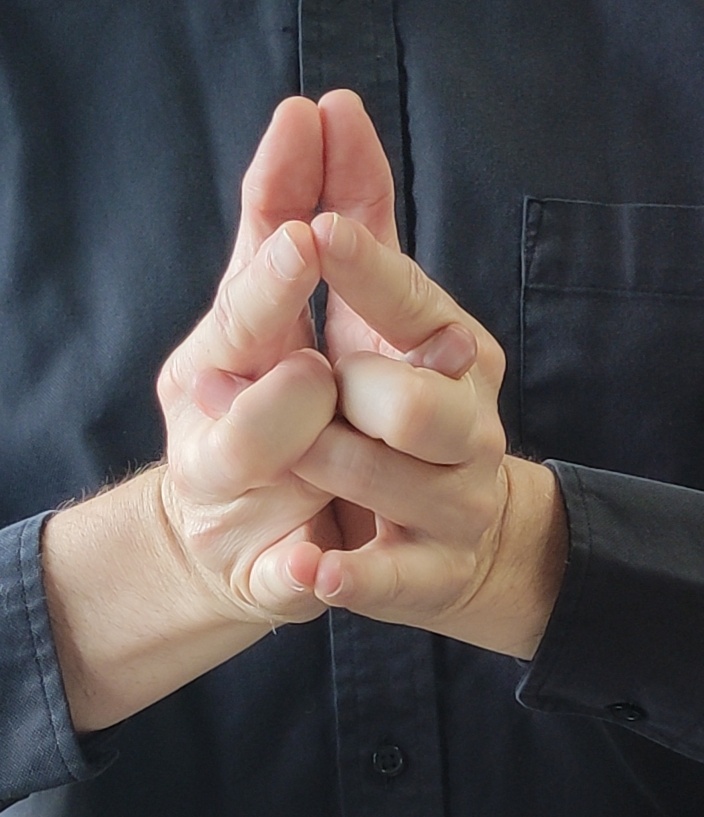
Purification & regeneration
Sha activates the body's regenerative power — the ability to dissolve energetic blockages and to extend that purifying force to others. From this seal on, the practice begins to reach beyond your own body.
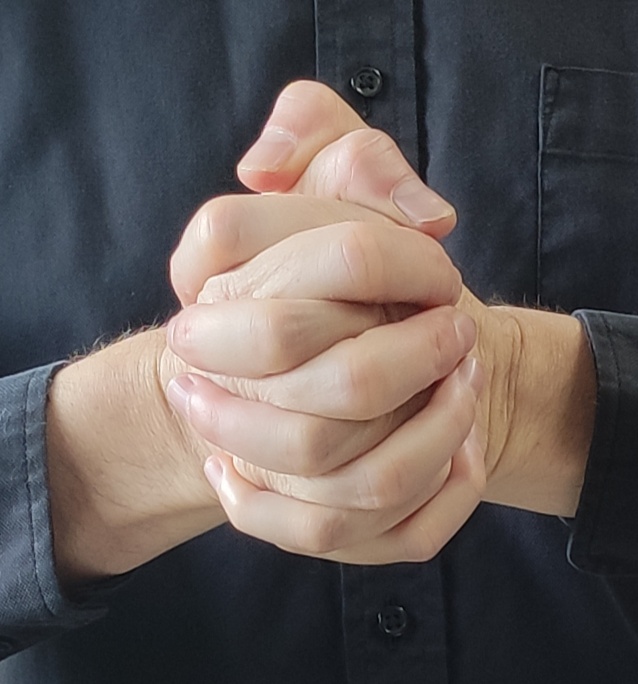
Subtle perception
Kai opens subtle perception. From this point on, perception begins to change fundamentally: you feel the energetic currents preceding an event before it occurs. The threshold into the subtle realm is crossed.
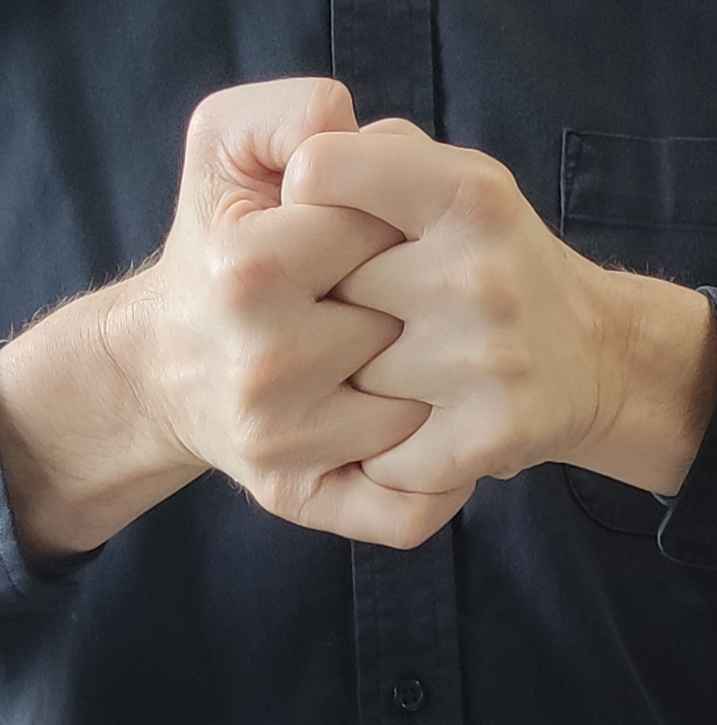
Grasping thoughts
Jin deepens subtle perception further — into the ability to grasp the thoughts and intentions of others. What began in Kai as a hint becomes clear perception in Jin.
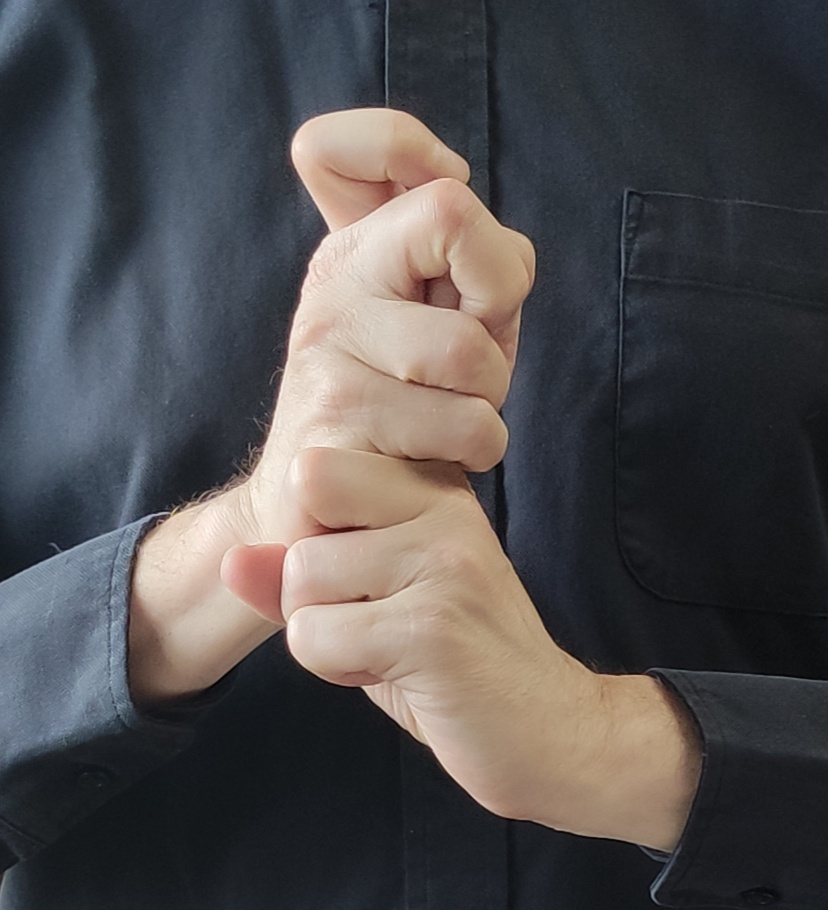
Mastering space & time
Retsu dissolves the familiar boundaries of space and time and opens perception across distance. Near and far, now and then — these categories begin to dissolve.
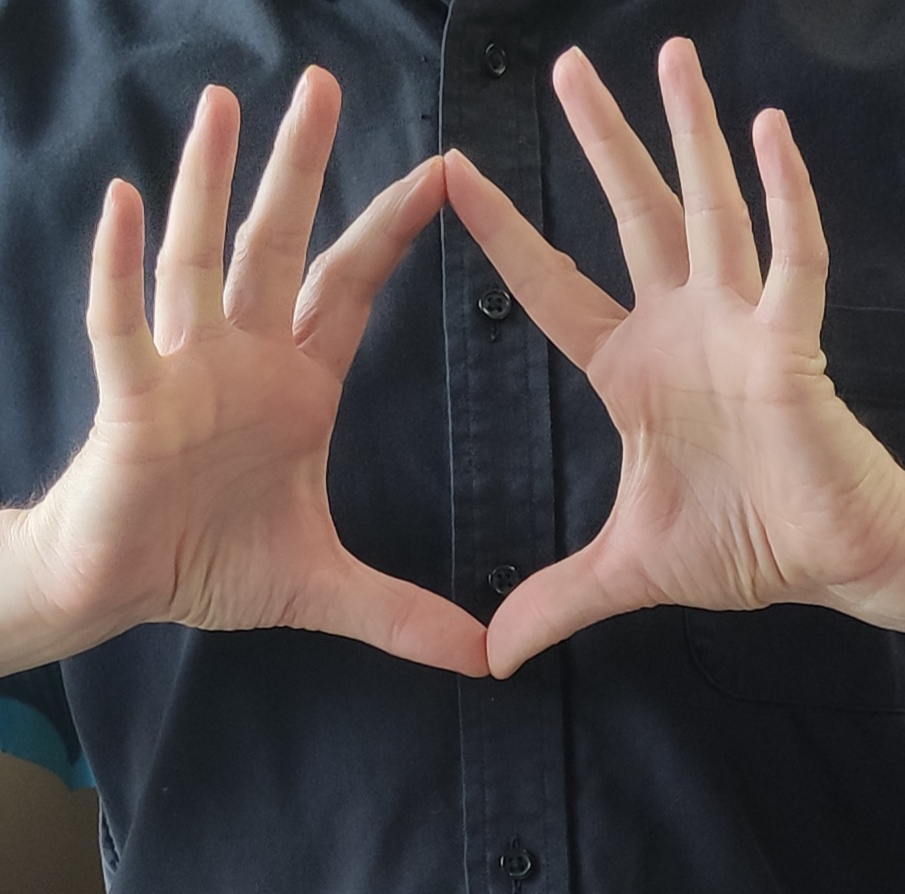
Elements & manifestation
Zai connects you to the five elements and opens access to manifestation — the conscious influence on the material plane. Here the refined perception becomes a shaping force.
Enlightenment & invisibility
Zen is the completion: enlightenment, the merging with the whole — and the ability to become invisible to disturbing influences. All previous seals converge here.
Each seal builds on the one before. Rin ignites the flame. Hyō directs it. Tō harmonises. Sha purifies. Kai opens perception. Jin deepens it. Retsu breaks through the boundaries. Zai manifests. Zen completes. Nine mudras, nine keys — all must be opened in the right order. The initiation gives the key. The meditation with the mudra turns it.
Where Kuji Kiri really comes from
The origins of Kuji Kiri do not lie in a single tradition. They reach into several currents that wove together in Japan over centuries: shamanic Daoism, Shugendo — the mountain ascetic path of the Yamabushi —, Shinto, and the esoteric Buddhism of the Shingon school. All four traditions have left their traces in the nine seals.
From shamanic Daoism comes the idea that certain hand gestures create a direct connection to cosmic forces. In Shugendo these practices were refined in extreme mountain retreats — through fasting, waterfall meditation, and rituals lasting for days. The Shinto tradition brought the connection to the Kami, the spirits of nature. And the Shingon school gave it all the structure of the three mysteries: mudra, mantra, visualisation. The oldest preserved compilation of Kuji rituals — the Fuju Shū of the Shugendo tradition — contains over 26 different Kuji practices, recorded between the 12th and 16th centuries.
This interweaving makes Kuji Kiri unique. It is not a purely Buddhist ritual and not purely shamanic. It is a living fabric of traditions that found each other in Japan — and that exist in this form only there. Even the individual mudras carry different roots: the Gejishi-In and Naijishi-In — the outer and inner lion mudras — come from Shugendo, not from Shingon Buddhism. The Chiken-In — the wisdom fist — is the mudra of Dainichi Nyorai himself.
Kakuban — when the wisdom king raised his voice 覚鑁
In the 12th century, on Mount Kōya — the holy mountain of the Shingon school — there lived a monk named 覚鑁 Kakuban. He was brilliant, a reformer, and inconvenient. At only 17 he had already received the full transmission of esoteric Buddhism. He wrote over 45 works, among them the Gorin kuji myō himitsu shaku — the "Secret Explanations of the Five Elements and the Nine Signs" — in which he was the first to systematically describe how the nine Kuji signs interact with the five elements and the harmonisation of the organs.
In 1134 Kakuban was appointed abbot, with 238 temples under him. His reforms made him enemies. The conflict escalated until in 1140 the monks of Kongōbuji — backed by samurai with cavalry and foot soldiers — attacked Kakuban's temple.
What happened next reads like a scene from a story. Kakuban was performing the Fudō-Hō ritual before a statue of Fudō Myōō when the attackers stormed the building. In the hall they did not see Kakuban — they saw two identical statues of Fudō Myōō. Unable to tell which was flesh and which was wood, they shot arrows through the knees of both figures. Only one began to bleed. The samurai were convinced the bleeding figure must be the real Kakuban — but that was exactly the illusion Fudō Myōō had created. They aimed all their arrows at the bleeding figure to kill Kakuban. What they pierced was the wooden statue. Then the voice of Fudō Myōō rang out — proclaiming that Kakuban stood under his protection. Kakuban escaped through the back door before the entire hall went up in flames.
Kakuban survived and fled to 根来山 Negorosan — Mount Negoro. What unfolded there was an exchange that would change the history of Japanese spirituality and martial art forever.
Negorosan was one of the great centres of the ninja in Japan. The ninja gave Kakuban protection — they shielded the fugitive from his pursuers. In return, Kakuban initiated the ninja into the spiritual practice of Kuji Kiri: the nine seals, the mudras, the mantras, the rituals of Fudō Myōō. He gave them what had just saved his own life — a practice that builds such a deep protection that even an armed army could not overcome a single monk.
The ninja immediately recognised the value of what Kakuban offered them. Protection, invisibility, sharpened perception, the ability to feel hostile intentions in advance — everything the nine seals open was exactly what they needed for their work in the unseen. Until his death in 1143, Kakuban passed on what he had perfected on Mount Kōya. And so what the world would later come to know as ninja magic was born: Kuji Kiri.
Kakuban's escape is not fantasy. It shows what happens when someone has entered the practice of Fudō Myōō so deeply that the spirit protects them in a life-threatening situation. Two identical figures. An illusion that fooled an entire army. A voice speaking from the fire. And an escape in the last second. This is the power that stands behind the nine seals.

Fudō Myōō — the unshakable wisdom king 不動明王
At the centre of Kuji Kiri practice stands 不動明王 Fudō Myōō — the unshakable wisdom king. Myōō literally means "king of light," where light here means wisdom. His sword cuts through everything that has hardened. His fire burns illusion and deception. He is the power that saved Kakuban — and the power that stands behind the Kuji Kiri grid.
The sword mudra of Kuji Kiri is directly connected to Fudō Myōō. When the nine signs are cut into the air, it happens through his power. The grid-shaped cuts — five horizontal and four vertical lines — are not a symbolic ritual. They purify the space, order the energy, and build a protection that rests on the connection to this spirit. The initiation into his three mysteries — mantra, mudra, Siddham — opens access to a power that people have been experiencing for over a thousand years in the temples of Japan.
The spirits of Kuji Kiri
Fudō Myōō stands at the centre — but he is not alone. On the Kuji Kiri Master Path, practitioners encounter a series of spirits, each bringing its own qualities and powers.
金剛薩埵 Kongosatta — Vajrasattva — is the second mythical patriarch of the Shingon school. He is the foundation of the entire transmission lineage: Nāgārjuna once opened the iron pagoda in southern India and received from Kongosatta the esoteric transmissions that led to the founding of the Shingon school. Whoever enters the Kuji Kiri Master Path stands in this lineage.
摩利支天 Dai Marishi-Ten — the personification of light. Three faces, eight arms. She races ahead of the stars, because her light is always there first. She generates mirages and illusions that confuse enemies. The ninja used her power for invisibility. The samurai called on her for protection of the body and for victory. Her Siddham is Ma, and her energy is part of Kanman — the combined power of Fudō Myōō and Marishi-Ten.
日天 Nitten — the sun deity, a transformation of Kannon. Nitten dwells in the palace of the sun, where there are no shadows and everything is bathed in light. His Siddham is A — the same syllable that stands at the heart of Shingon meditation. In Kuji Kiri practice he strengthens the solar power within the practitioner: enemies are blinded, deception is exposed, and one's own light becomes so strong that it transforms the space around the practitioner.
Each of these spirits has its own story, its own powers, and its own connection to the practice — more on this in upcoming articles. Here it is enough to know: on the Kuji Kiri Master Path you do not work alone. You step into a field of forces that have been called upon and experienced for centuries.
The Goshinbō — the foundation 護身法
Before the nine seals come into use, there is a practice that prepares the ground: the 護身法 Goshinbō — the method of self-protection. It purifies and protects on three levels: body, speech, and mind — the three levels of karma in Shingon Buddhism. This includes meditations that are foundational in the Shingon tradition: the breath count, which calms the mind. The moon disc meditation, which generates inner clarity. The Ajikan — the heart of Shingon practice. And a practice that transforms inner anger and rage.
All of this happens before the first sword mudra is formed. For Kuji Kiri without inner preparation would be like a sword without guidance — the power is there, but without direction. The Goshinbō is the precondition that allows the purifying forces of Fudō Myōō to flow through you.

Kuji Kiri and the ninja
Yes, ninja practiced Kuji Kiri. This is not a myth and not a fictional invention. As we have seen, it was Kakuban himself who initiated the ninja at Negorosan into the practice — protection in exchange for protection. The Yamabushi — mountain ascetics of Shugendo — formed an additional bridge between the esoteric temple world and the warriors in the unseen. This is how what came to be called ninja magic emerged: Kuji Kiri. Not as a fighting technique, but as a spiritual armoury — the same one that had kept Kakuban alive.
What stories and films have made of it is a spectacular simplification. The hand signs are real. The idea that they release powers is real. But what happens in seconds in fiction rests, in the actual tradition, on years of meditative practice and direct initiation. Mark carries this lineage. As Ninjutsu Grandmaster, successor of Taguchi Sensei, he stands in a direct transmission that includes both the spiritual and the martial side of Kuji Kiri.
The three mysteries — Sanmitsu 三密
Kuji Kiri follows the same principle as all practices of esoteric Buddhism: the three mysteries — 三密 Sanmitsu. Body, speech, mind. Mudra, mantra, visualisation. All three act at the same time. The body forms the mudra — a hand sign that creates an energetic form. The speech sounds the mantra — a sacred syllable in resonance with the power being called upon. The mind holds the visualisation — an inner image that opens the connection to the spirit.
This principle is identical to what Kūkai — the founder of the Shingon school — introduced into Japanese practice over 1200 years ago. Kuji Kiri and Shingon Reiki come from the same source. Whoever practices Shingon Reiki is already moving in the same field — the Reiki symbols come from the same tradition as the nine seals.
And just like Kuji Kiri, the Reiki symbols mirror this living fabric of traditions that found each other in Japan and exist in this form only there. That is why elements from esoteric Buddhism, Shugendo, Shinto, and shamanic Daoism appear in the Reiki symbols — for Mikao Usui was deeply rooted in all of these traditions. And he practiced Kuji Kiri. When he withdrew to the Kurama mountains for his three-week meditation, he chose a place that had been known for centuries as a centre of the Tengu — the mountain spirits who, according to Japanese tradition, initiated the ninja into the arts of the unseen. The Kurama mountains were one of the original centres of the ninja.

Kuji Kiri and Shingon Reiki are not separate paths. They come from the same source, use the same principles, and lead into the same depth. Usui practiced both. The place of his enlightenment was a place of the ninja. Whoever practices one already stands at the threshold of the other.
What you have always sensed is true
Maybe you landed here because as a child you saw hand signs in a Japanese film and knew — there must be something real to this. Maybe you tried to imitate them, and felt something was missing. Maybe you searched online and found only empty imitation.
What you sensed is true. Behind the hand signs stands a real, living practice. A practice that activates body, mind, and voice at the same time. That connects you with spirits who have been called upon for over a thousand years. That opens abilities you have always suspected in yourself — from sharpened intuition, to the perception of subtle energies, to powers that no YouTube video can show.
But it requires initiation. Not imitation, not self-study. Direct transmission — from initiate to initiate, in a lineage that reaches back to Kūkai, Kakuban, and the Yamabushi. Mark carries this lineage. Three years of practice in Kyōto. Practice in Shingon, Tendai, and Zen temples. The 88 temples of the Shikoku pilgrimage on foot. As direct successor of Taguchi Sensei in Taguchi-Ryu Ninjutsu, as researcher and practitioner of the Shingon tradition, as a Japanologist with a doctorate who has read the original sources.
What he passes on is not interpretation. It is direct transmission — in the same form in which he received it. Nine levels. Each with its own initiation. Each with its own power. And what you have always sensed is waiting at the beginning of this path.
The Kuji Kiri Master Path
Nine levels. Direct initiation. A practice that is over a thousand years old — and that you will not find anywhere else in this form.
To the Master Path Upcoming events