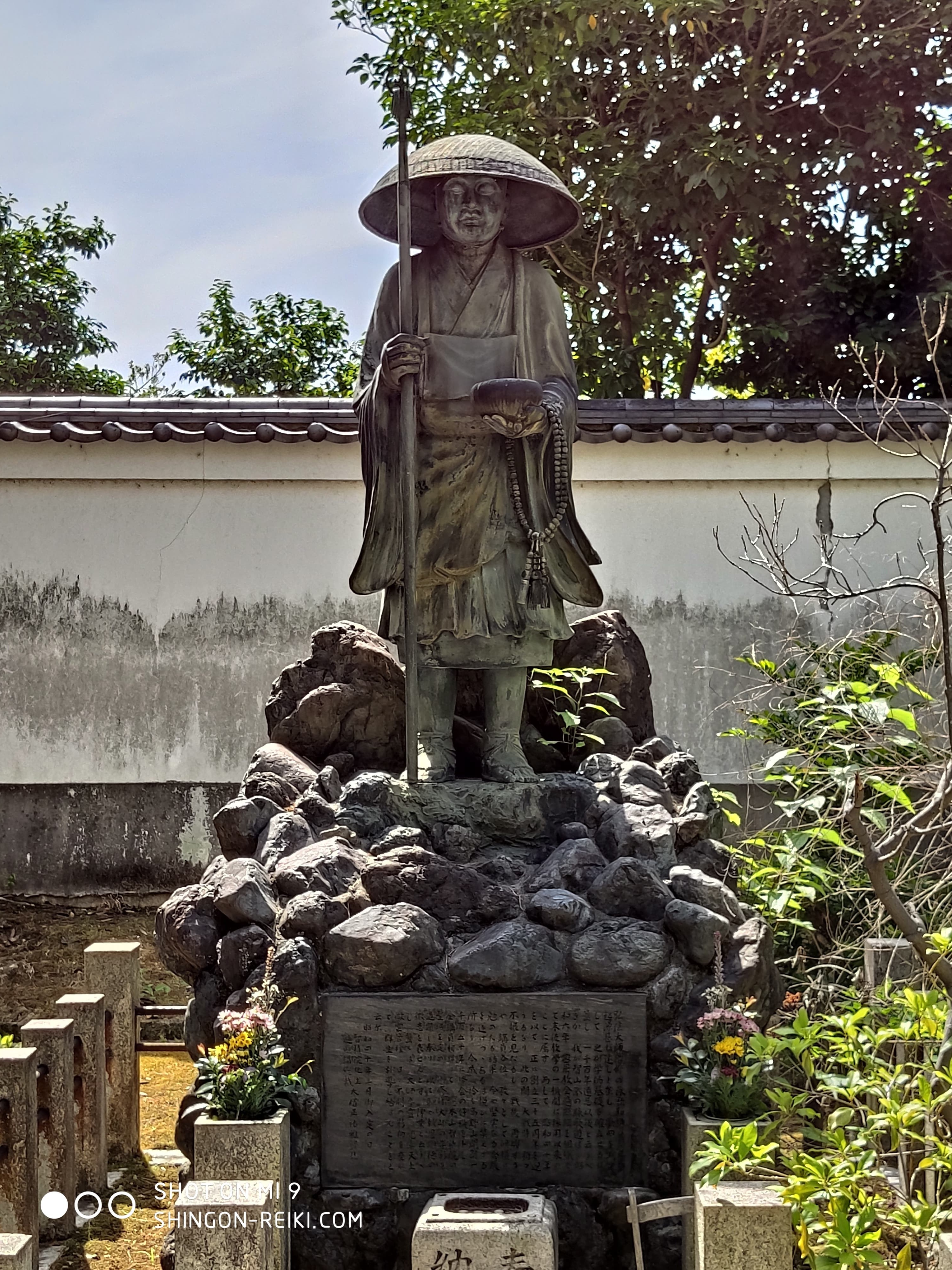
A Name Every Child in Japan Knows
空海 — Kūkai. Literally: sky and sea. Born 774 on Shikoku, died — or rather, entered eternal meditation — in 835 on Mount Kōya. In Japan every child knows him by his posthumous honorific name: 弘法大師, Kōbō Daishi — the great master who spread the wisdom.
More than 1200 years after his death, over a million pilgrims still walk the 88 temples of Shikoku each year — in his footsteps. On Mount Kōya they visit his mausoleum at Okunoin, the most sacred place of Shingon Buddhism. There the faithful believe he has not died. That he is waiting. That he is meditating until the next cosmic Buddha appears.
This is not a legend from a history book. It is living faith, today, in one of the most technologically advanced countries on earth. Who was this man — and what did he create that reaches so deep?
The Boy Who Left the University
Kūkai came from the Saeki family, a branch of the old Ōtomo clan. His family belonged to the lower nobility on Shikoku. As a young man he was sent to the state university in Nara — a privilege that promised a career as a state official. Confucian classics, Chinese administrative theory, the safe path into government service.
Kūkai broke off. At about eighteen he left the university and wrote a text that changed everything: the Sangō shiiki — "Indications of the Goals of the Three Teachings." In it he compared Confucianism, Daoism, and Buddhism, and arrived at a clear conclusion: Buddhism reaches the deepest. Not as theory. As path.
What drove him was not intellectual curiosity. It was urgency. The question that would not let him go: How does a human being reach awakening — not in a distant future life, but now, in this body, in this existence?
Mountain Asceticism and the Morning Star
Instead of becoming a state official, Kūkai went into the mountains. He joined the mountain ascetics — the forerunners of what would later be called Shugendō. In the forests and gorges of Shikoku and the Kii Peninsula he practised meditation under extreme conditions. Cold water, fasting, solitude, the wilderness as temple.
In this period he practised the Gumonji ritual — an intensive meditation on Kokūzō Bosatsu, the bodhisattva of boundless wisdom. The ritual requires reciting Kokūzō's mantra one million times. A practice that lasts weeks and brings the practitioner to his limits.
Kūkai described what happened: during the practice the morning star appeared — and flew into his mouth. In that moment he understood that sky and sea are one. That the separation between inside and outside is illusion. The experience gave him his name: 空 Kū — sky, emptiness — and 海 Kai — the sea.
The morning star appeared — and flew into his mouth. In that moment he knew: sky and sea are one. That became his name.
Two Years in China — and a Complete Transmission
In 804 Kūkai sailed with a Japanese embassy to China — to the empire of the Tang dynasty, then the centre of the Buddhist world. He was 31 years old. His stay was supposed to last twenty years. It became two.
In the capital Chang'an he met Master Huiguo — the seventh patriarch of esoteric Buddhism, who taught at the famous Qinglong temple. Huiguo had waited decades for a recipient to whom he could give the complete transmission. When Kūkai stood before him, he is said to have spoken: I have waited a long time for you.
Within a few months Huiguo transmitted the entire esoteric tradition to Kūkai: both mandalas — the Taizōkai mandala (Womb World) and the Kongōkai mandala (Diamond World) — the initiation rituals, the Siddham script, the mantras, the mudras, the meditation techniques. All of it. Complete. Without holding back.
Shortly afterwards Huiguo died. The transmission had taken place just in time. In China itself the tradition would soon be extinguished, when the emperor began the Buddhist persecution. What Kūkai brought to Japan would soon exist nowhere else in this completeness.
The transmission from Huiguo to Kūkai was not an academic transfer of knowledge. It was a spiritual authorisation — the authority to carry, pass on, and keep alive the entire esoteric tradition. Kūkai was 33 years old when he returned to Japan with this responsibility.
Founding a Tradition
In 806 Kūkai returned to Japan — with hundreds of texts, ritual implements, mandalas, and Siddham scripts. What followed was unprecedented. He founded not just a new Buddhist school. He changed Japan.

-
774Born on Shikoku in the province of Sanuki, son of the Saeki family
-
~792Leaves the university in Nara — writes the Sangō shiiki, comparing Confucianism, Daoism, Buddhism
-
~793Mountain asceticism and the Gumonji ritual — the morning star appears, the experience gives him his name
-
804Departure to China with the imperial embassy to the Tang dynasty
-
805Complete transmission from Master Huiguo at the Qinglong temple in Chang'an — both mandalas, all initiations
-
806Return to Japan with hundreds of texts, mandalas, and ritual implements
-
816Founding of Mount Kōya — temple complex in the mountains of the Kii Peninsula, still the main seat of Shingon
-
823Receives the Tōji temple in Kyoto from the emperor — Shingon becomes a national tradition
-
835Entry into eternal meditation (Nyūjō) on Mount Kōya — venerated to this day as Kōbō Daishi
Kūkai received the Tōji temple in Kyoto from the emperor, which became the centre of Shingon in the capital. On Mount Kōya he founded a temple complex in the secluded mountain wilderness of the Kii Peninsula — a place for intensive meditation and ritual practice, which over the centuries grew into an entire temple town.
But Kūkai was more than a religious founder. He was a calligrapher — among the finest Japan ever produced. He wrote over two hundred works. He founded Japan's first public school, open not only to the nobility. His esoteric name was Henjō Kongō — the diamond whose light pervades all things and transforms them. His initiation name was the esoteric name of Dainichi Nyorai himself.
Sokushin jōbutsu — Buddhahood in This Body
Kūkai's central message was revolutionary — and still is. In his major work Sokushin jōbutsu gi he set out the core question that had driven him since youth: is awakening possible in this living body — not after death, not in a future life, but now?
His answer was yes. And it was not abstract. Kūkai described a concrete activation system: the Three Mysteries — 三密 Sanmitsu. Body (mudra), speech (mantra), and mind (visualisation), practised at the same time, open access to the Buddha-nature already present in every human being.
This was no philosophy for monks alone. It was a system that addressed everyone. The foundation: Dainichi Nyorai — the cosmic Buddha whose body is the entire universe — is not somewhere out there. He manifests in every atom, every breath, every gesture. A human being does not have to become anything they are not already. They have to recognise it.
All things speak. All forms are signs. The universe is the body of the cosmic Buddha. Whoever speaks the Siddham A touches the source of all things.
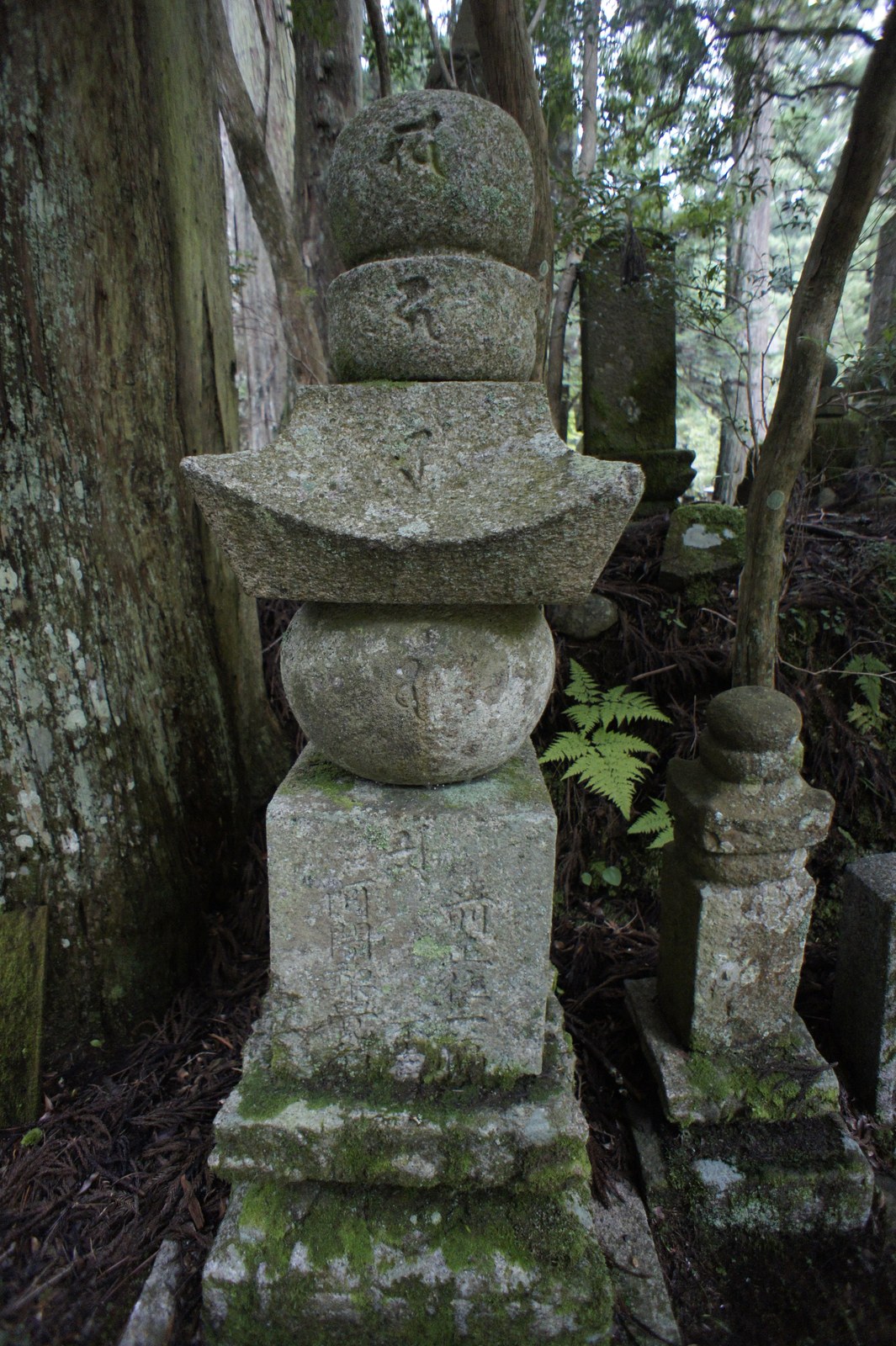
— After Kūkai's Shōji jissō giThe Siddham characters played a central role in Kūkai's system. Each character is not only a letter — it is a doorway. The Siddham A (अ) stands for the un-arisen, the unborn, the source. The Ajikan — the contemplation of this character — became the core meditation of Shingon Buddhism. To this day it is the deepest practice of the tradition — and one of the foundations of Shingon Reiki.
Kūkai's Legacy in Shingon Reiki
Without Kūkai there is no Shingon Reiki. That is not rhetorical exaggeration. It is historical fact. The initiations, the Siddham characters, the Three Mysteries, the meditations with the Buddhist spirits — all of it goes back to Kūkai's transmission.
When you visualise the Siddham HRIH in Shingon Reiki and call Senju Kannon, you practise within a lineage that Kūkai brought to Japan over 1200 years ago. When you form the sword mudra and speak Fudo Myoo's mantra, you use an activation system that Kūkai received from Huiguo. The tradition is not old and venerable. It is old and alive.
Dainichi Nyorai → Vajrasattva → Nāgārjuna → Nāgabodhi → Vajrabodhi → Amoghavajra → Huiguo → Kūkai. This is the transmission lineage of esoteric Buddhism. Kūkai was the eighth patriarch. From him the lineage flows on — through 1200 years of Japanese temple practice into the present. Into Shingon Reiki.
The Man Who Has Never Stopped Meditating
On 21 March 835, Kūkai entered eternal meditation on Mount Kōya — Nyūjō, the state of unending samādhi. He had told his companions he would wait. For Miroku Bosatsu — Maitreya, the Buddha of the future, said to appear in 5.6 billion years.
The Japanese imperial court awarded him posthumously the title Kōbō Daishi. On Mount Kōya, food is still brought to him daily. Monks prepare a meal in the morning and at noon and carry it in solemn procession to Okunoin — the innermost sanctuary, where Kūkai sits in meditation.
This is not folkloric tradition. It is lived faith. For millions of Japanese, Kūkai is not a historical monk. He is a living presence. A companion on pilgrimage. A force that can be felt when you meet his sacred places with an open heart.
Whoever walks the Shikoku Pilgrimage — the 88 temples following Kūkai's footsteps — does not, by tradition, walk alone. The pilgrim carries on the staff the words: Dōgyō ninin — two on the path together. The second walker is Kūkai.

Experience Kūkai's Tradition
Shingon Reiki stands in the lineage Kūkai brought to Japan over 1200 years ago. The initiations, the Siddham, the Three Mysteries — all of it begins with Level 1.